3 Aug 2026
Jurisdictional Variations Guiding Transitions from Trackside Selections to Live Table Interactions via Smartphone Interfaces
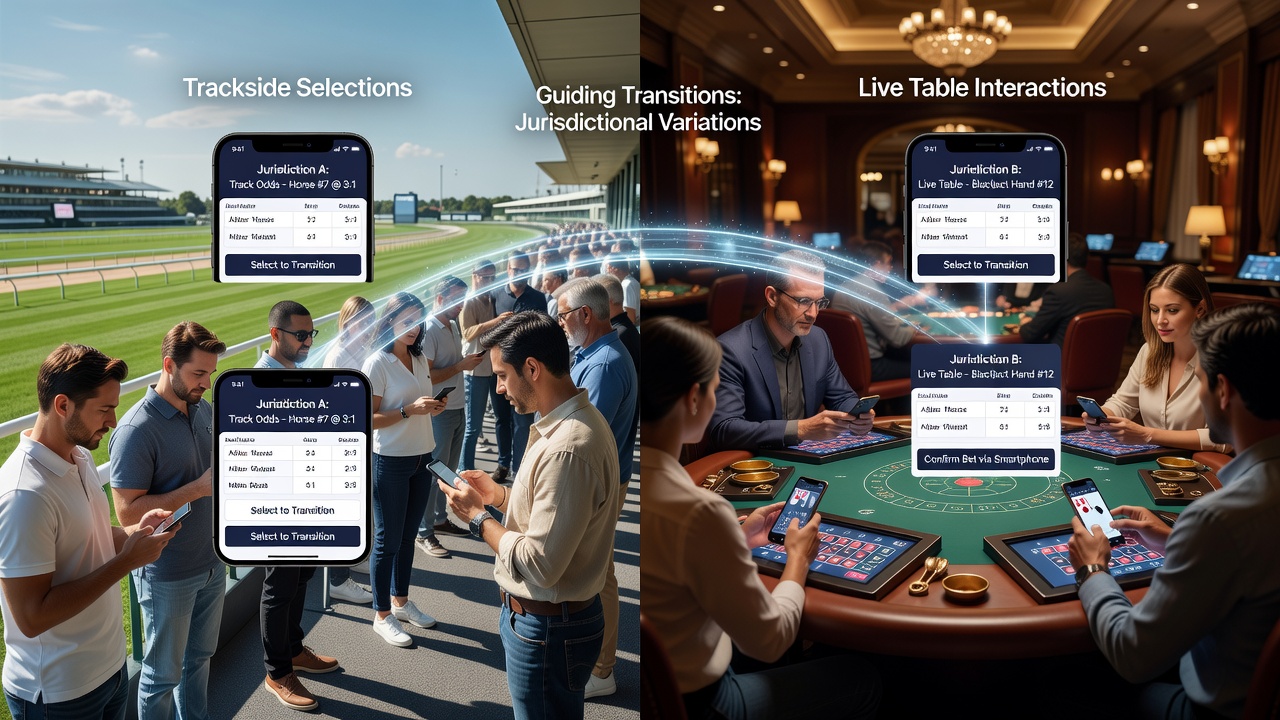
Regulatory differences across states shape how bettors move from trackside horse racing wagers to live dealer table games on mobile devices, with licensing rules and app requirements creating distinct pathways in each jurisdiction. Data from state gaming reports indicate that these variations influence both the speed of transitions and the range of games available through smartphone interfaces.
State Licensing Structures and App Integration
Observers note that states with established casino operations often maintain separate licensing tracks for sports betting and table games, which affects how apps connect horse racing selections to live dealer interactions. In Ohio, for example, 2023 law adjustments permitted mobile platforms to bundle NBA prop bets with blackjack sessions, allowing users to shift between trackside racing data and real-time table streams without leaving a single application. Researchers tracking these developments found that such bundling increased session durations in states where regulators approved unified interfaces.
Yet California presents a contrasting model where international platforms fill gaps left by slower domestic approvals, prompting punters to navigate offshore options for both racing props and slot-linked table games. According to figures from regional oversight bodies, these offshore routes handled substantial volumes of NBA prop activity alongside automated wheel spins during the first half of 2026.
Technical Requirements for Cross-Game Shifts
App developers must comply with jurisdiction-specific geofencing and identity verification standards when enabling moves from traditional racing bets to live dealer environments. Those who studied implementation patterns discovered that Midwestern territories frequently require additional licensing layers for wheel-based games, which delays the rollout of seamless smartphone transitions compared with coastal states. Data shows these extra steps result in staggered feature releases, where horse racing modules activate earlier than live table modules within the same application.

What's interesting is how data tools now assist users in managing strategy crossovers, such as applying handicapping insights from football forecasts to automated table decisions. In jurisdictions with updated licensing frameworks, apps incorporate real-time analytics that pull racing statistics and feed them into live roulette interfaces, though approval timelines vary significantly by region.
Revenue Patterns and Market Responses
Commercial gaming revenue reached over $6 billion in February 2026, reflecting 4.6 percent year-over-year growth driven partly by expanded mobile access to blended offerings. Industry reports reveal that states permitting integrated track-to-table experiences captured larger shares of this increase, while areas with stricter separation rules saw slower adoption rates. Regulators in emerging markets continue to refine distribution models that allocate portions of sports betting proceeds to support both racing venues and casino table operations.
One study revealed that slot manufacturers and table game providers adjusted product strategies after observing tariff impacts at major industry gatherings, which indirectly affected the mobile ecosystems supporting cross-game play. Observers tracking these shifts note that August 2026 updates in several Midwestern states further clarified licensing pathways, enabling more operators to link horse racing wagers directly to live dealer sessions on handheld devices.
Global Comparisons and Emerging Frameworks
International examples provide additional context for U.S. developments. Australia's national framework, administered through bodies such as the Australian Communications and Media Authority, emphasizes consistent verification standards that facilitate smoother transitions between racing and table formats on mobile platforms. Canadian provincial regulators, including those in Ontario, have implemented similar approaches that tie professional sports wagers to live dealer content under single licensing umbrellas.
Those who've examined revenue distribution models in states with established casino operations highlight that integrated mobile systems often direct a percentage of sports event proceeds toward both track maintenance and table game innovation. These models differ from purely offshore arrangements, where unregulated markets valued at $5.9 trillion annually operate without such allocations.
Conclusion
Jurisdictional variations continue to determine the pace and scope of smartphone-enabled shifts from trackside selections to live table interactions, with each state's licensing rules and technical mandates creating unique operational landscapes. Data from multiple oversight sources confirm that these differences produce measurable impacts on user access, revenue allocation, and feature availability across regions. As frameworks evolve, operators and regulators alike adjust strategies to align mobile ecosystems with local requirements while maintaining connections between racing and table game offerings.